Automotive BLDC Motor Solutions for Modern Vehicle Systems
We design and manufacture high-performance Automotive BLDC Motor systems for modern vehicles, including electric vehicles (EVs), hybrid platforms, and advanced automotive electronics. Our motors are engineered to deliver high efficiency, low noise, EMC compliance, and long-term reliability in demanding automotive environments.
As a professional supplier of Automotive Brushless DC Motor solutions, we provide full customization from design and simulation to prototyping and mass production support.
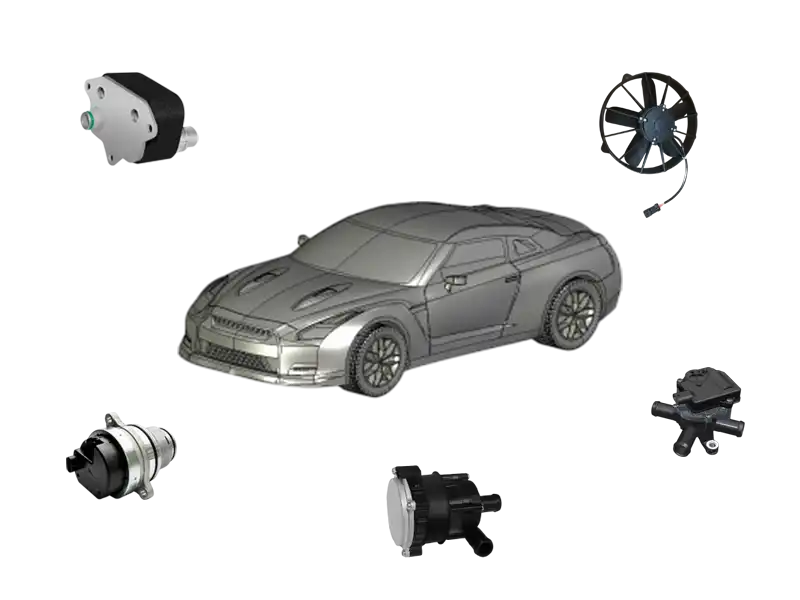
Key Challenges in Automotive Motor Applications
Energy Efficiency and EV Range Limitations
Low-efficiency motors increase energy consumption in EV and hybrid systems, reducing driving range and overall system performance.
Thermal Stress in Engine Bay Environments
Continuous operation under high temperature conditions can cause overheating and reduced motor lifespan in cooling and pump systems.
Noise and Vibration in Cabin Systems
Motor noise in HVAC, seat adjustment, and actuator systems directly impacts passenger comfort and premium vehicle experience.
EMC Interference and System Stability
Poor motor design can cause electromagnetic interference that affects ADAS systems, infotainment, and vehicle communication networks.
Space and Weight Constraints
Automotive systems require compact and lightweight motors that can integrate seamlessly into tight mechanical layouts.
Harsh Environmental Conditions
Vibration, humidity, salt spray, and temperature extremes require durable and reliable Automotive Brushless DC Motor designs.
Long Development Cycles and High MOQ
Traditional suppliers often cannot support fast prototyping or low-volume development, delaying automotive innovation.
Applications of Automotive BLDC Motor
Our motors are widely used in automotive thermal systems, fluid control systems, and auxiliary vehicle components.
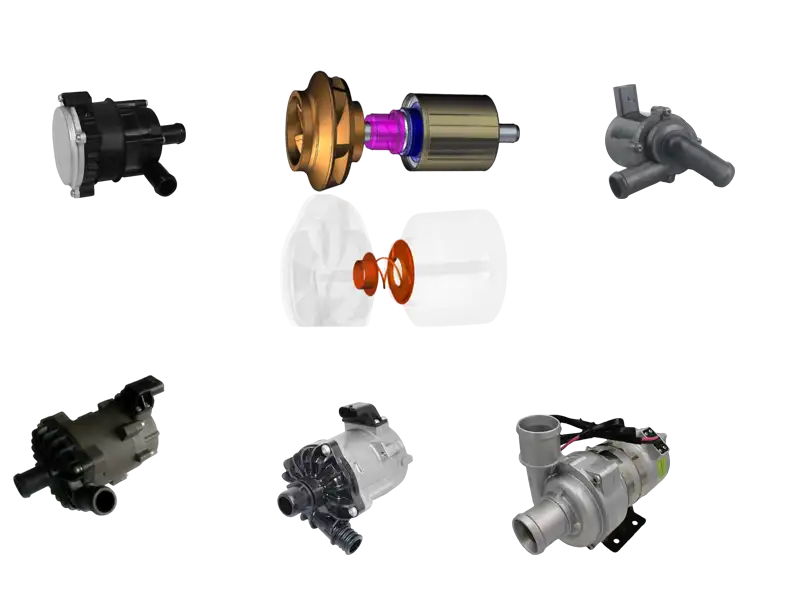
Automotive Electronic Water Pump Motors
High-efficiency Automotive BLDC Motor systems for engine cooling and EV battery thermal management.
- Continuous duty operation
- High reliability under heat
- Stable fluid control
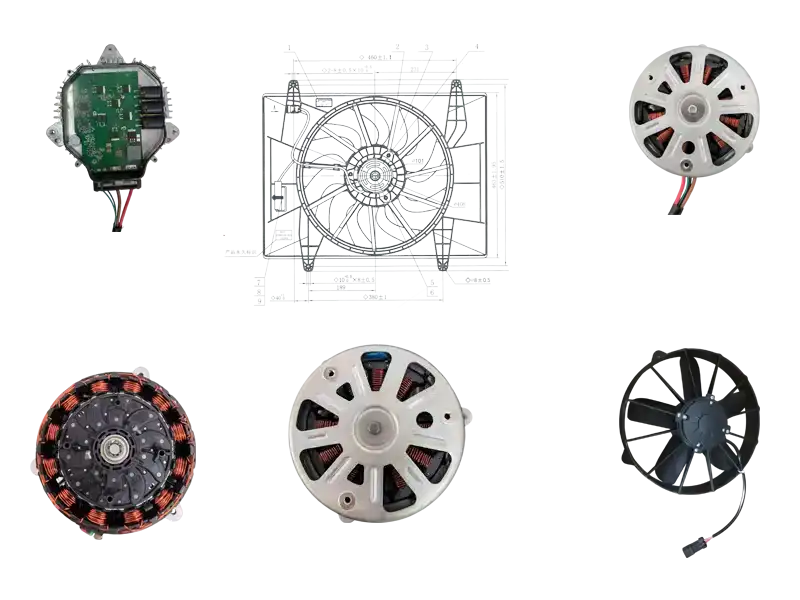
Automotive Cooling Fan Motors
Brushless motors designed for radiator fans, condenser fans, and HVAC systems.
- High airflow efficiency
- Low noise operation
- Energy saving performance
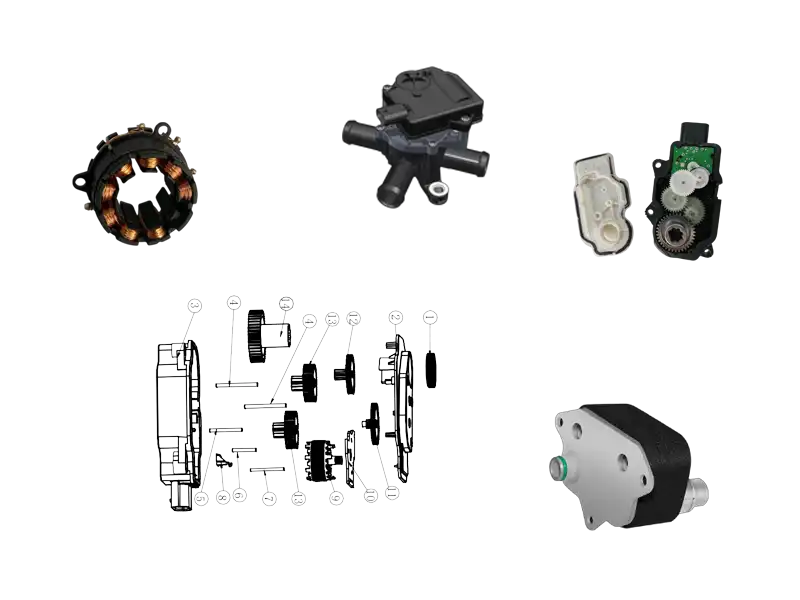
Automotive Valve Actuator Motors
Compact motors for precise coolant flow and thermal management control.
- High positioning accuracy
- Fast response time
- Long service life
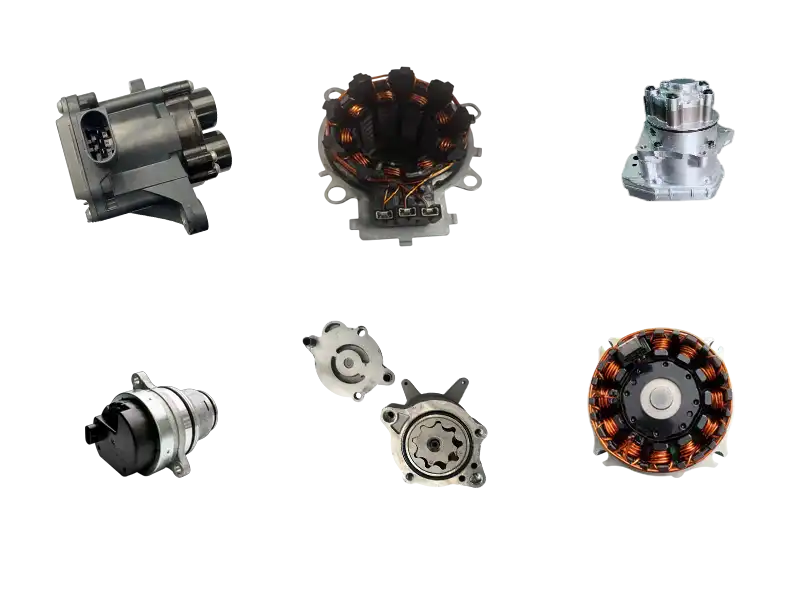
Transmission Oil Pump Motors
Reliable Automotive Brushless DC Motor solutions for transmission and lubrication systems.
- Stable pressure control
- High efficiency operation
- Durable under continuous load
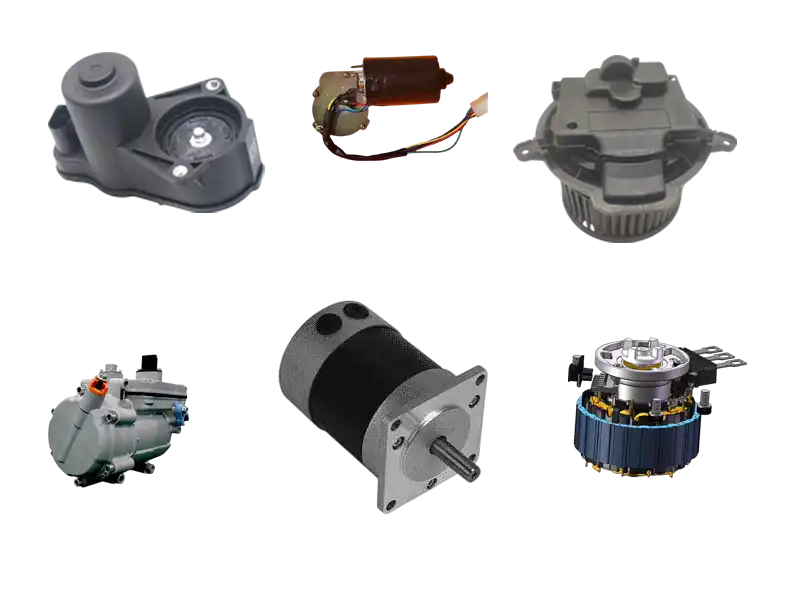
Other Automotive Applications
Our Automotive BLDC Motor systems are also used in seat adjusters, grille shutters, vacuum pumps, and smart automotive actuators.
Custom voltage, torque, size, and integration options are available.
Frequently Asked Questions
Do you support 12V and 24V automotive systems?
Yes, our Automotive Brushless DC Motor solutions support standard automotive voltage platforms.
Can you customize for specific torque/speed profiles?
Fully Customized—Motor specifications designed to meet your technical requirements
Can you reverse engineer an existing motor?
We support full sample disassembly, parameter testing, structural replication and performance upgrading for existing automotive brushless DC motor.
Do you provide testing reports?
Yes, we provide performance validation and reliability test reports.
What information is needed to customize a brushless motor?
We need to know the application, performance specifications, mounting method, and operating environment of your motor. Any drawings, photos, or other relevant documentation would be very helpful.
Do you sign NDAs for custom projects?
Yes. We sign NDAs on request and handle your drawings, samples, and test data under strict confidentiality to protect your project and IP.
What makes your Automotive BLDC Motor suitable for vehicle applications?
Our motors are designed for high efficiency, EMC compliance, and durability under harsh automotive conditions.
Can your motors be used in EV thermal management systems?
Yes, our motors are widely used in EV cooling pumps and battery thermal systems.