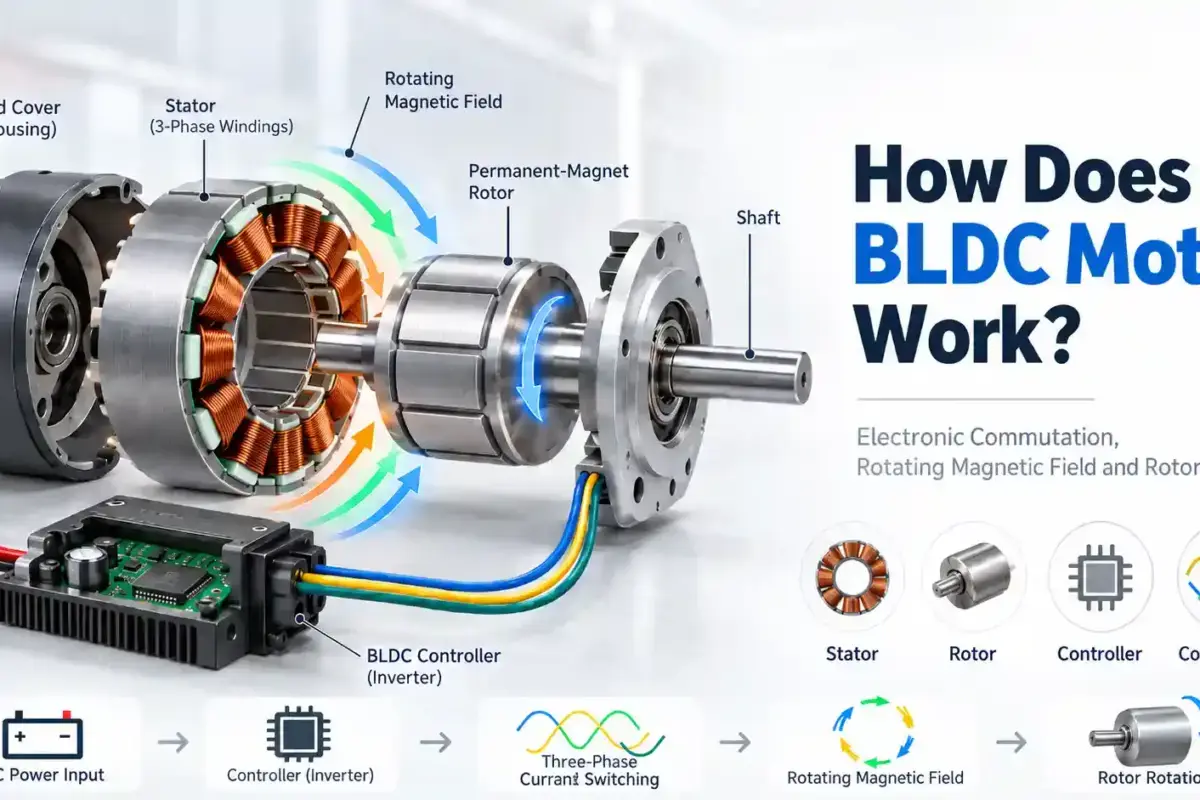
BLDC Motor Basics
Learn the fundamentals of brushless DC motors, including how BLDC motors work, key components, motor types, performance characteristics, and essential engineering concepts. This category provides practical guides for engineers, designers, and OEM teams evaluating BLDC motor solutions.
All articles
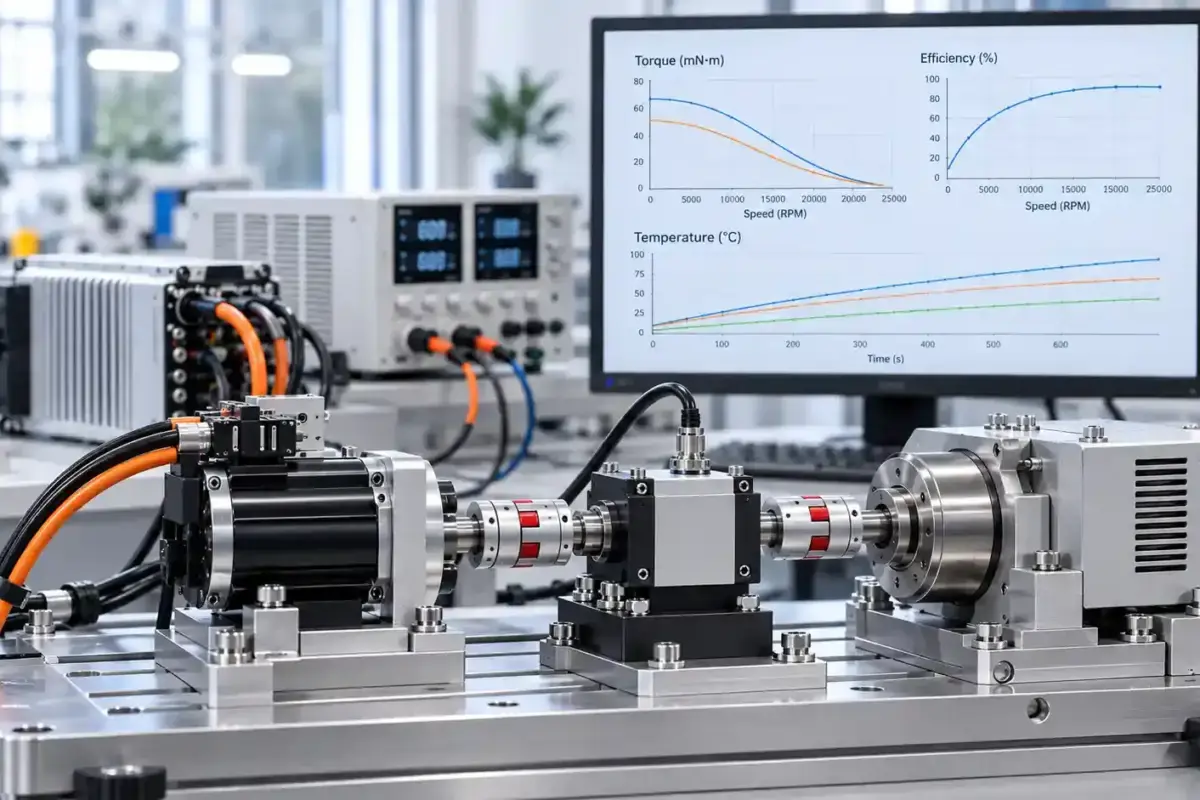
BLDC Motor Testing: Complete Guide to Inspection, Performance & Validation
Introduction BLDC motor testing is not limited to measuring speed, torque or efficiency. A complete validation process should answer three questions: Does the motor meet its design specification? → Can it deliver the required performance in the end-use application? → Can it survive the intended operating environment? Depending on the project, testing may include dimensional…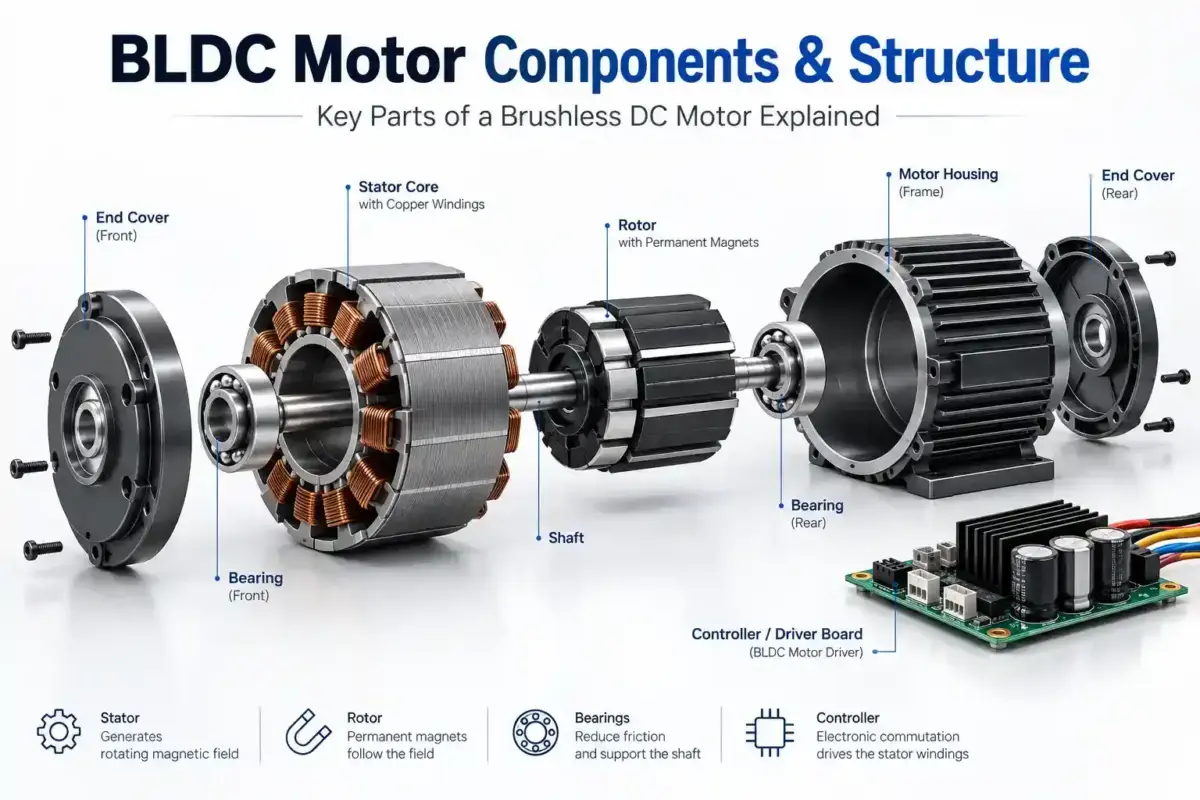
BLDC Motor Components Explained: Complete Guide to BLDC Motor Structure
Introduction The main physical components of a BLDC motor include the stator, rotor, permanent magnets, shaft, bearings, housing and end covers. Electronic commutation is provided by a controller, which may be integrated with the motor or installed separately. This guide explains the structure, materials and function of each major BLDC motor component, with diagrams and…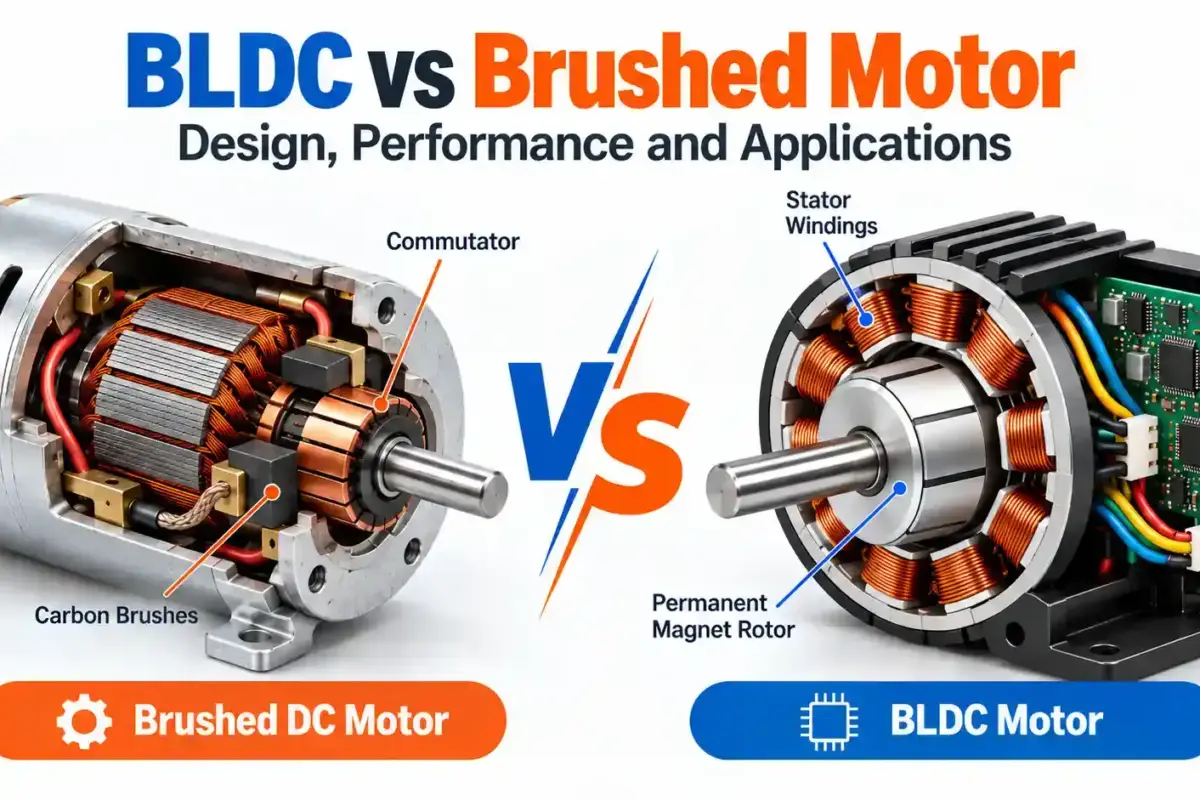
BLDC vs Brushed Motor: Complete Comparison of Design, Performance, and Applications
Introduction When selecting an electric motor for a new product, engineers often need to decide between a BLDC motor and a traditional brushed DC motor. The comparison of BLDC vs Brushed Motor is important for engineers because the two technologies use completely different approaches to electrical commutation, motor construction, and performance optimization. The main difference…