Introduction
When selecting an electric motor for a new product, engineers often need to decide between a BLDC motor and a traditional brushed DC motor.
The comparison of BLDC vs Brushed Motor is important for engineers because the two technologies use completely different approaches to electrical commutation, motor construction, and performance optimization.
The main difference between a BLDC motor and a brushed motor is that a BLDC motor uses electronic commutation, while a brushed motor relies on mechanical brushes and a commutator to switch current direction.
This difference directly affects:
| Motor Lifespan | Maintenance Requirements |
|---|---|
| Efficiency | Manufacturing Complexity |
| Noise | Overall System Cost |
| Thermal Performance | Speed Control |
This article provides a complete comparison of BLDC vs Brushed Motor, helping engineers understand which motor technology is better suited for different applications.
1. BLDC vs Brushed Motor: Structural Design Comparison
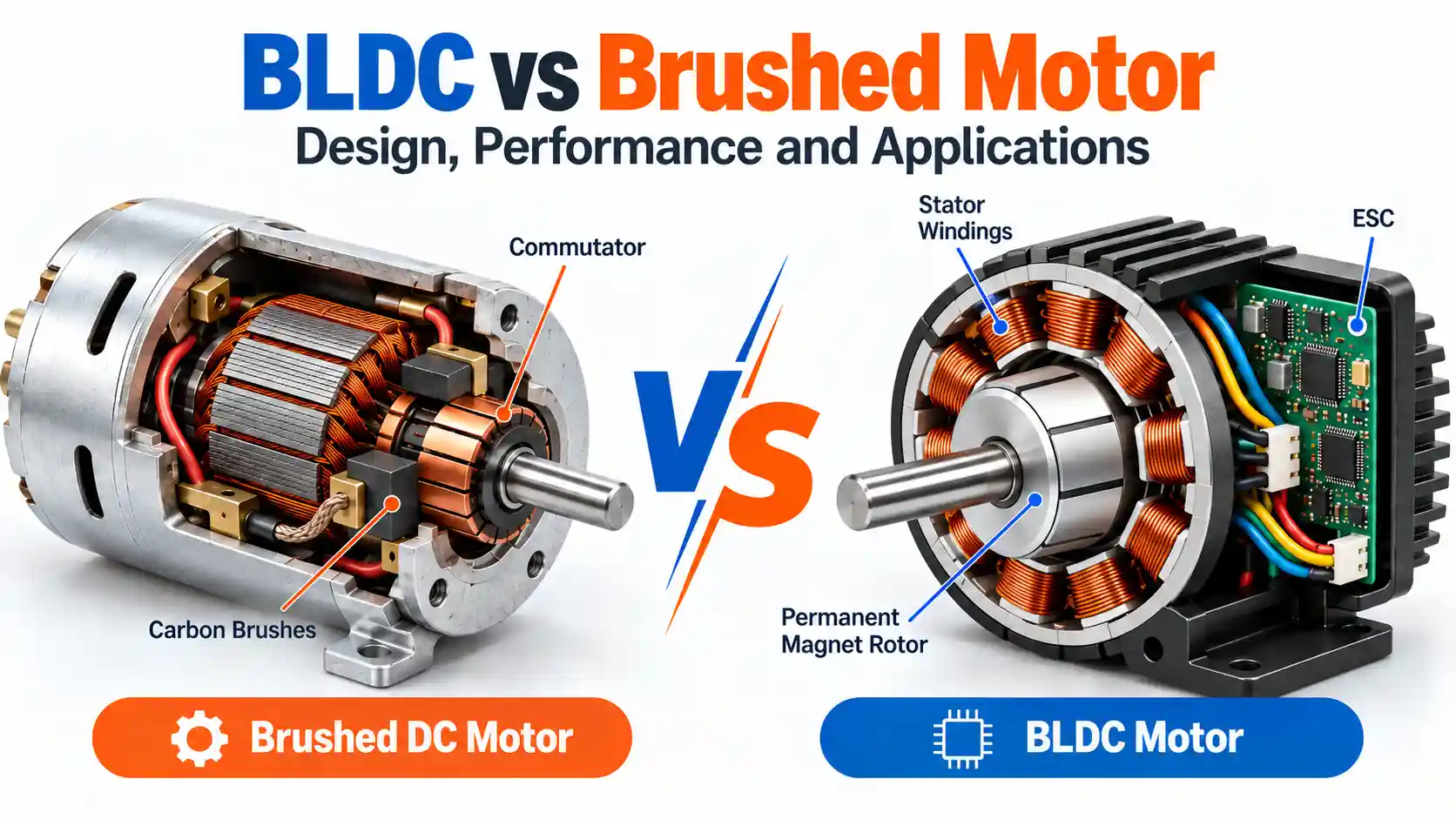
Brushed DC Motor Structure
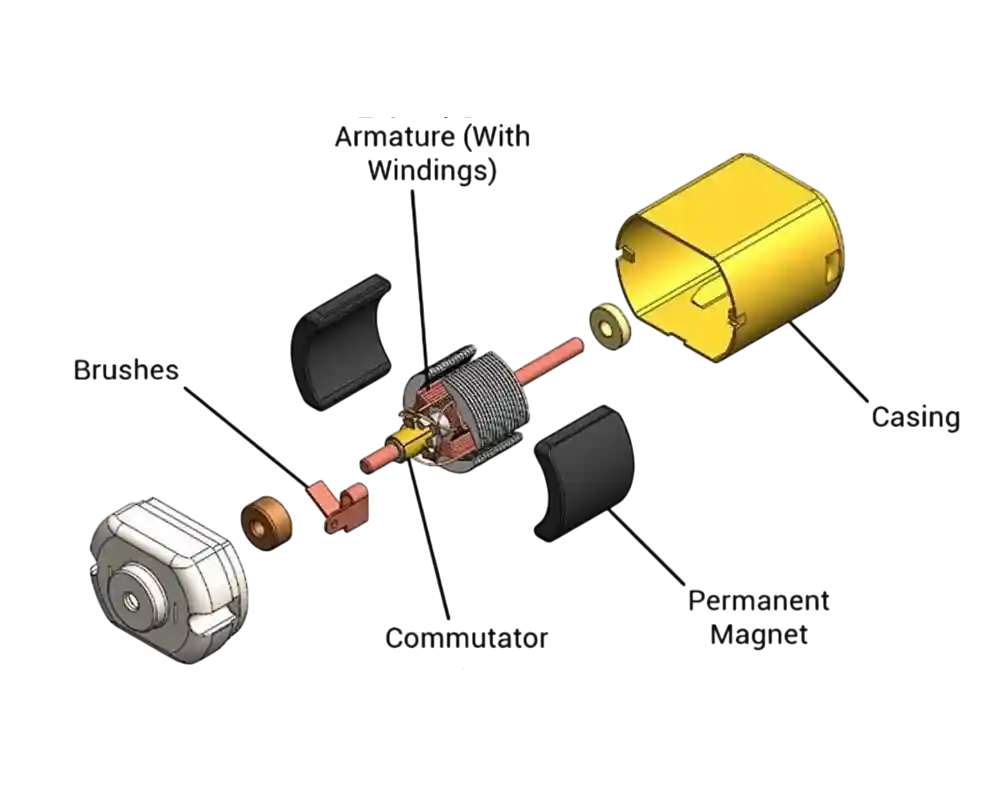
A traditional brushed DC motor mainly consists of:
| Front Cover | Bearing | Rotor Shaft |
|---|---|---|
| Armature Core | Copper Windings | Commutator |
| Carbon Brushes | Permanent Magnets | Housing |
In a typical permanent-magnet brushed DC motor, the armature windings are located on the rotor, while permanent magnets are mounted in the stator.
During operation, carbon brushes physically contact the rotating commutator to switch current direction in the rotor winding.
BLDC Motor Structure
A BLDC motor uses a different architecture:
| Front Flange | Front Bearing | Rotor Shaft |
|---|---|---|
| Permanent Magnet Rotor | Air Gap | Stator Core |
| Copper Windings | Motor Housing | Hall Sensor PCB |
| Electronic Controller |
The permanent magnets are mounted on the rotor, while the windings are placed on the stator.
Instead of mechanical brushes, an electronic controller performs commutation.
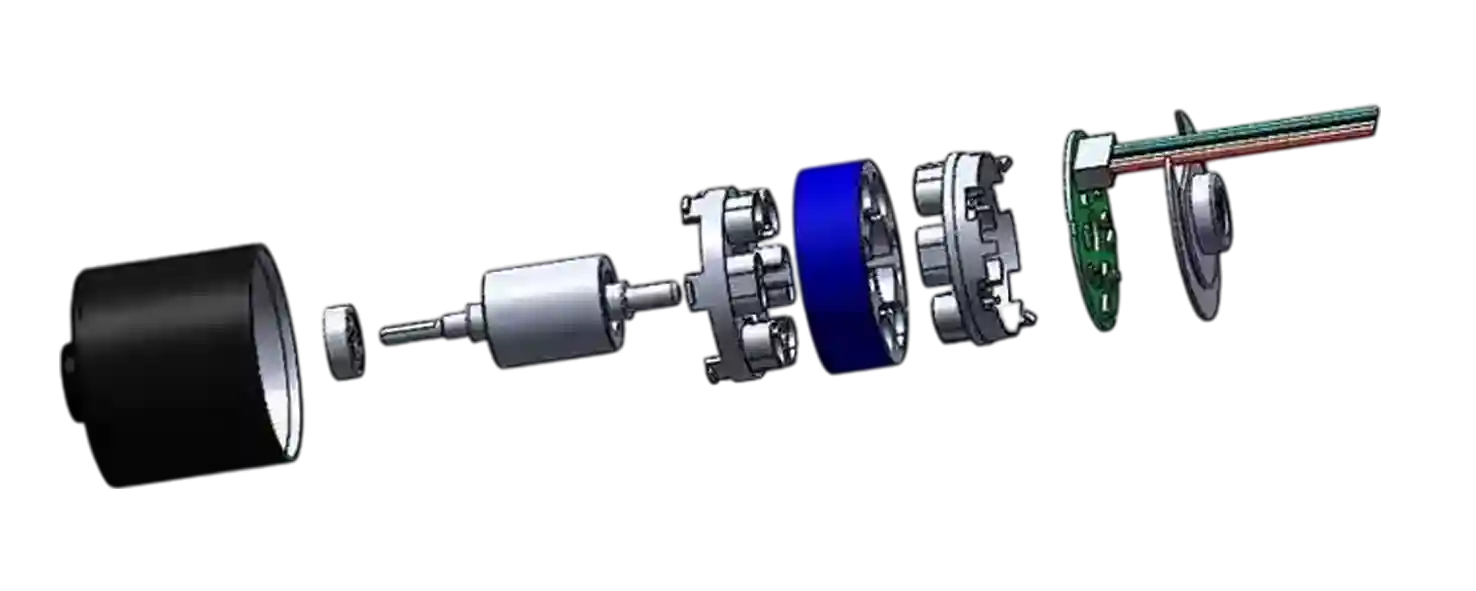
For a detailed breakdown of stator, rotor, bearings, housing and controller components, see our BLDC Motor Components Guide.
2. Working Principle Comparison
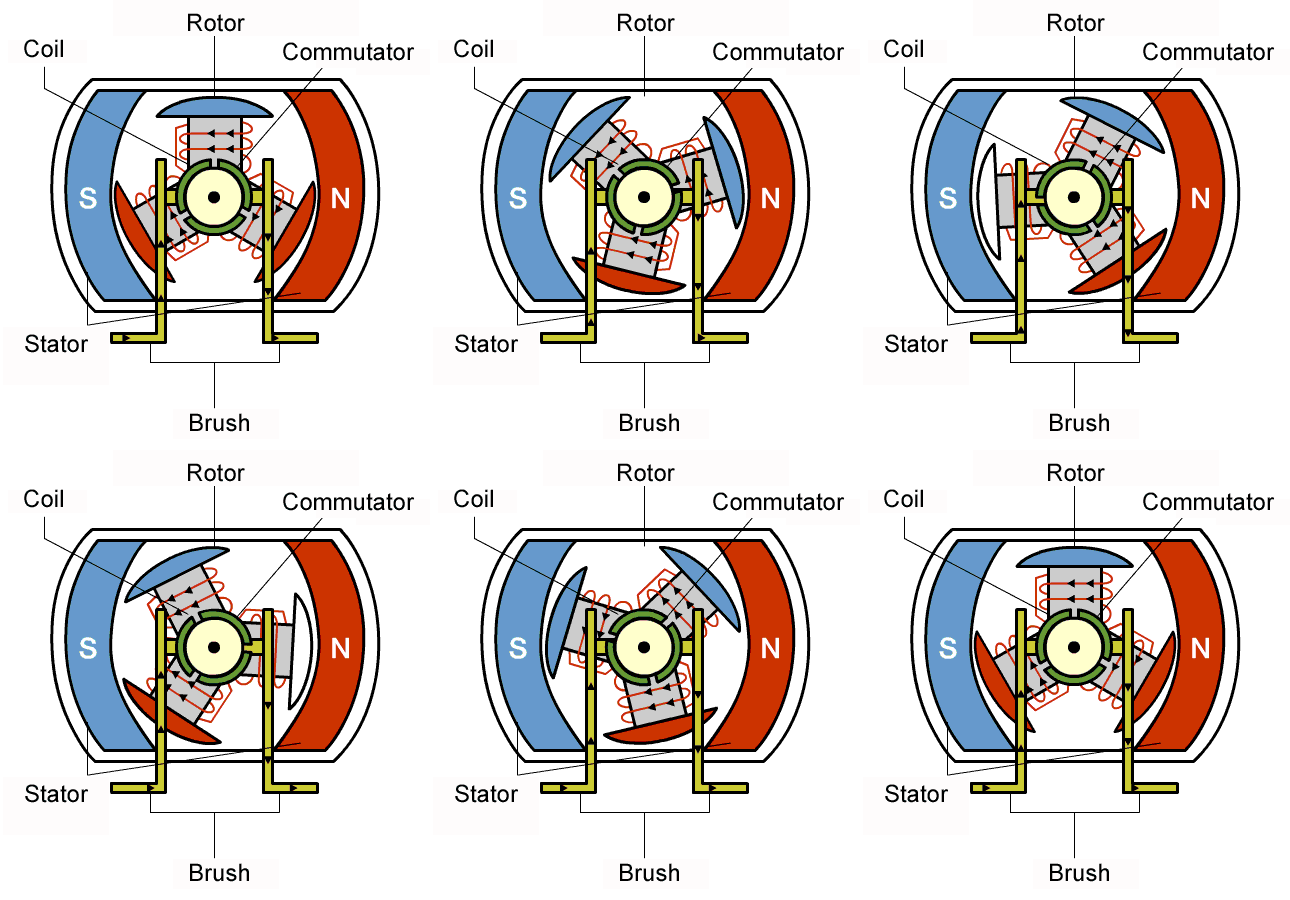
How Does a Brushed Motor Work?
A brushed motor operates through mechanical commutation.
The process:
DC Power Input → Carbon Brush Contact → Commutator Switching → Rotor Magnetic Field Changes → Rotor Rotation
When current flows through the armature winding, a magnetic field is generated.
The interaction between the rotor magnetic field and permanent magnets creates torque.
As the rotor rotates, the brushes continuously contact different commutator segments to maintain rotation.
Advantages
- Simple structure
- Easy control
- Low initial cost
Limitations
- Brush wear
- Electrical sparks
- Mechanical friction
- Limited speed capability
How Does a BLDC Motor Work?
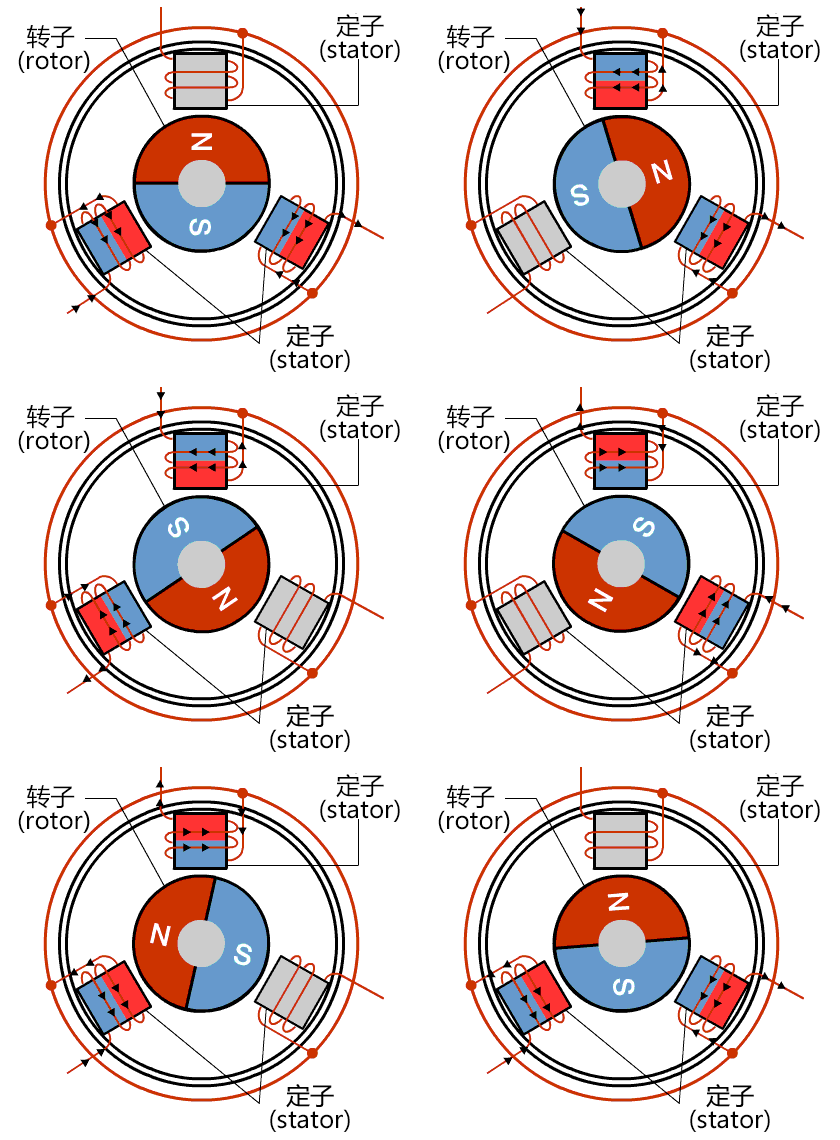
A BLDC motor uses electronic commutation.
The controller determines rotor position and switches current through different stator phases.
DC Power Input → Motor Controller → Three-Phase Current Switching → Rotating Magnetic Field → Permanent Magnet Rotor Rotation
In a typical three-phase six-step BLDC drive, the controller energizes two motor phases during each commutation sector while the third phase is left unpowered. The switching state advances every 60 electrical degrees, creating a rotating stator magnetic field that drives the permanent-magnet rotor.
Rotor Position Detection → Controller Determines Commutation Sector → Two Phases Energized → Next 60° Electrical Sector → Continuous Rotation
Because there is no physical contact between electrical switching components, BLDC motors achieve higher efficiency and longer operating life.
3. Manufacturing Process Comparison
Brushed Motor Manufacturing
Brushed motors require:
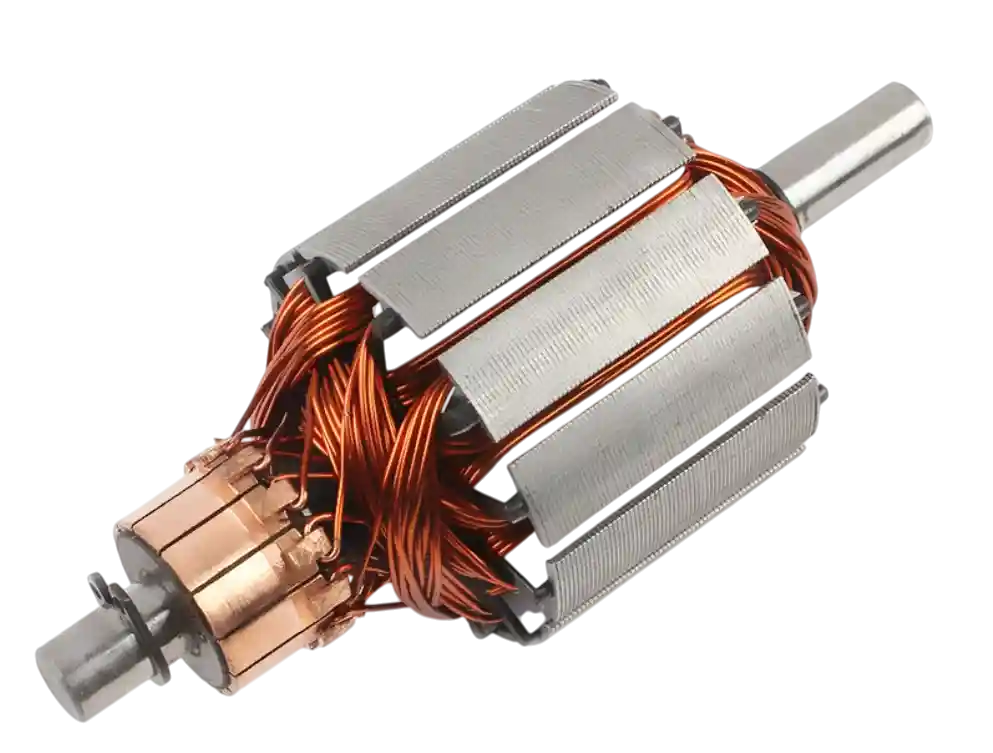
Rotor Manufacturing
Rotor Core Stamping → Copper Winding → Commutator Installation → Dynamic Balancing
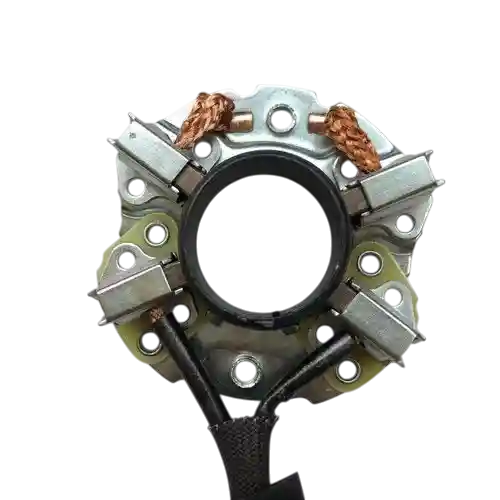
Brush Assembly
Carbon Brush Installation → Spring Mechanism Assembly → Brush Contact Adjustment
Final Assembly
Rotor Installation → Brush Alignment → Performance Testing
The commutator and brush system requires precise mechanical manufacturing because electrical switching depends on physical contact.
BLDC Motor Manufacturing Process
BLDC motor manufacturing includes:
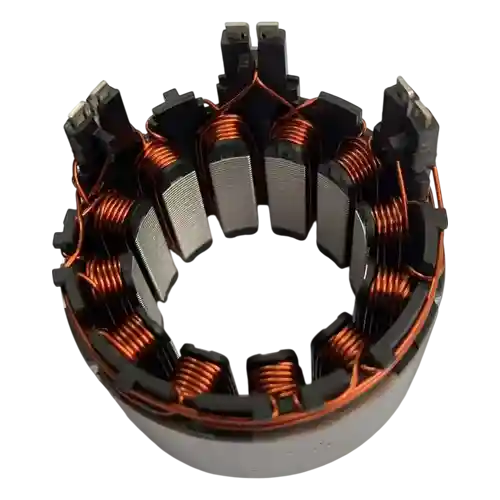
Stator Manufacturing
Silicon Steel Lamination → Core Assembly → Copper Winding → Insulation Treatment
Learn more about winding materials, phase layout and manufacturing in our BLDC Motor Winding Guide.
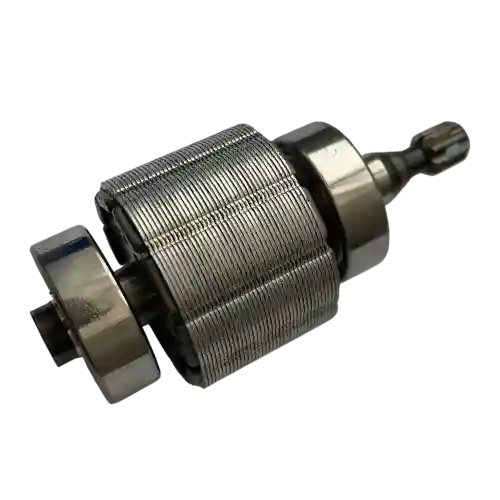
Rotor Manufacturing
Permanent Magnet Assembly → Rotor Balancing → Shaft Assembly
Final Assembly
Housing → Stator Press Fit → Rotor Installation → Bearing Assembly → Sensor Installation → Motor Testing
For OEM projects requiring prototypes before mass production, a professional BLDC Motor Prototyping Service can reduce development risk.
4. BLDC vs Brushed Motor Performance Comparison
Lifespan Comparison
| BLDC Motor | Brushed Motor |
|---|---|
| No brush or commutator wear | Brushes and commutator wear over time |
| Lower mechanical wear | Requires periodic brush maintenance |
| Life mainly limited by bearings, insulation and temperature | Life often limited by brush wear |
Key Difference:
For applications requiring long maintenance intervals and reduced wear-related servicing, BLDC motors generally offer an advantage.
Noise Comparison
| BLDC Motor | Brushed Motor |
|---|---|
| No brush or commutator noise | Additional brush and commutator noise |
| Main sources: bearings and electromagnetic vibration | Brush friction and electrical arcing add noise |
| Electronic control can help reduce torque ripple and vibration | Mechanical contact noise increases with wear |
Key Difference:
BLDC motors generally operate more quietly because they eliminate brush and commutator contact, although actual noise also depends on motor design, bearings and control strategy.
Efficiency and Temperature Rise
| BLDC Motor | Brushed Motor |
|---|---|
| No brush-contact losses | Additional brush and commutator losses |
| High efficiency potential with optimized control | Efficiency affected by brush friction and contact loss |
| Often lower temperature rise in comparable designs | More heat can be generated around brushes and commutator |
Key Difference:
Higher motor efficiency can reduce heat generation and cooling requirements. For compact applications with limited heat-dissipation space, BLDC motors often provide an advantage.
Speed Control Comparison
| BLDC Motor | Brushed Motor |
|---|---|
| Precise electronic speed and torque control | Simple speed control through voltage or PWM |
| Supports programmable operation and feedback control | Closed-loop control is possible but usually requires additional sensing and control |
| Common methods include six-step, sinusoidal and FOC | Control architecture is generally simpler |
Key Difference:
BLDC motors are better suited to applications requiring precise, programmable speed and torque control, while brushed motors offer simpler control for basic variable-speed operation.
Cost Comparison
| BLDC Motor | Brushed Motor |
|---|---|
| Higher initial system cost | Lower initial cost |
| Requires electronic controller | Simpler control requirements |
| More complex motor and control system | Mature and relatively simple construction |
| Lower routine maintenance | Brush replacement may add maintenance cost |
Key Difference:
Brushed motors are often more economical when low initial cost and simple operation are the priority. BLDC motors usually cost more upfront, but lower maintenance requirements and potentially higher efficiency can reduce total ownership cost in long-duty applications.
Electromagnetic Interference (EMI) Comparison
| BLDC Motor | Brushed Motor |
|---|---|
| No brush arcing | Brush and commutator arcing generate EMI |
| Main EMI comes from PWM and controller switching | Can produce broadband electrical noise and radio interference |
| Requires proper PCB layout, grounding and filtering | May require suppression capacitors and filtering |
Key Difference:
Brushed motors mainly generate EMI through mechanical commutation and arcing, while BLDC systems mainly generate EMI through electronic switching. Both require appropriate EMC design and filtering.
5. Application Comparison
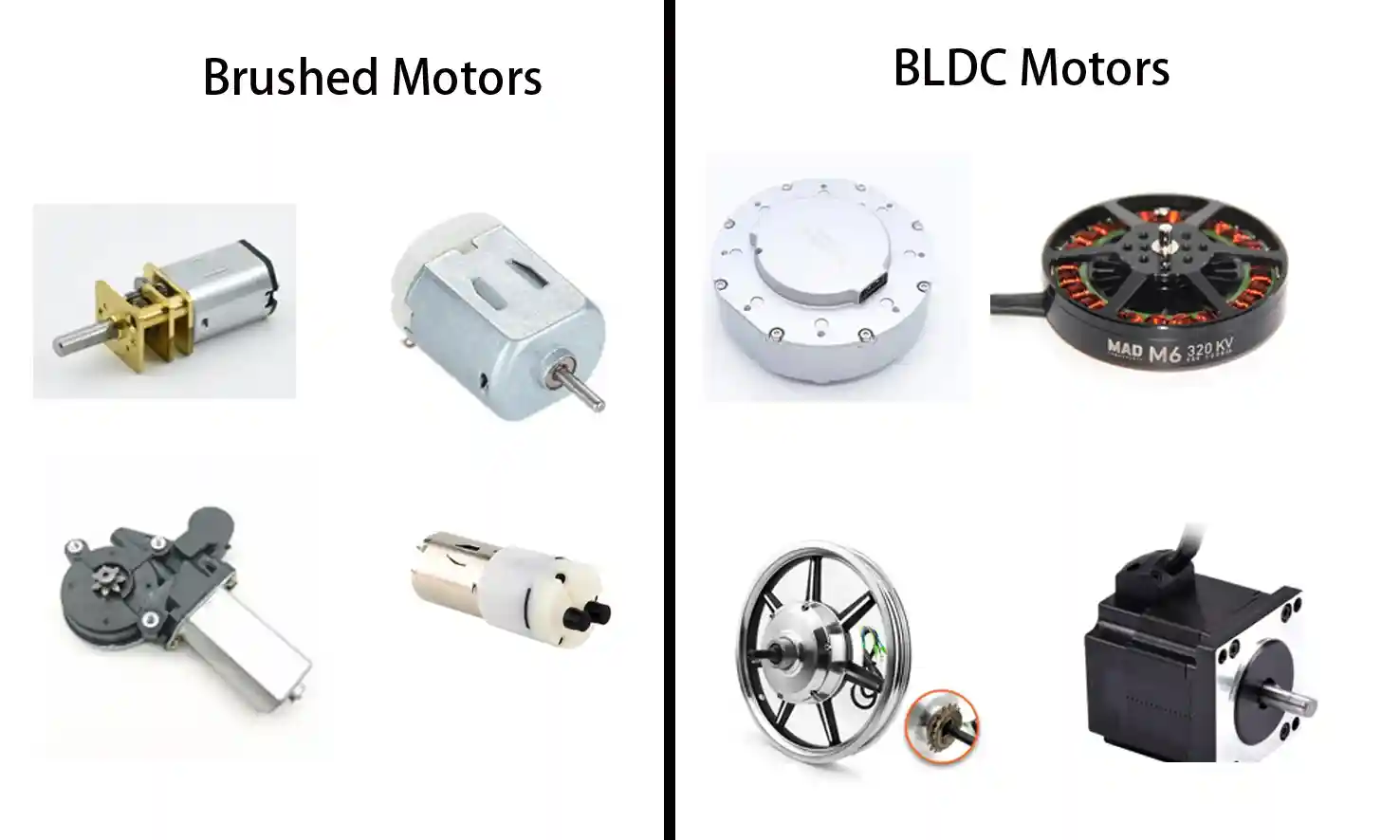
BLDC motors are generally preferred for products requiring long operating life, efficiency and precise electronic control, while brushed motors remain practical for simpler, cost-sensitive applications with limited duty cycles.
| BLDC Motor | Brushed Motor |
|---|---|
| Best for high efficiency, long service life, low maintenance and precise control | Best for simple control, low initial cost and intermittent operation |
| Robotics & automation | Low-cost power tools |
| Drones & UAVs | Simple pumps |
| Medical equipment | Small household products |
| Industrial equipment | Toys and basic actuators |
| Premium appliances | Cost-sensitive mechanisms |
6. Which Motor Should You Choose?
The decision between BLDC vs Brushed Motor depends on product requirements.
Choose BLDC motors when you need:
✓ Long service life
✓ High efficiency
✓ Low noise
✓ Accurate speed control
✓ Compact high-performance design
Choose brushed motors when you need:
✓ Lowest initial cost
✓ Simple control system
✓ Short operating time
For OEM products requiring optimized performance, a custom-designed BLDC motor often provides better long-term value.
For a broader motor-selection framework, see our BLDC Motor Selection Guide.
Conclusion
The BLDC vs Brushed Motor decision depends on balancing performance requirements, system cost, and long-term reliability.
Brushed motors use mechanical switching, making them simple and affordable.
BLDC motors use electronic commutation, providing higher efficiency, longer lifespan, lower noise, and better control performance.
Although BLDC motors require more advanced manufacturing and electronic control, their advantages make them the preferred choice for many modern engineering applications.
For companies developing new products, selecting the right motor technology early in the design process can significantly improve reliability, efficiency, and product competitiveness.
Smart Drive provides custom BLDC motor design, prototyping, and manufacturing support for OEM customers who need application-specific motor solutions.